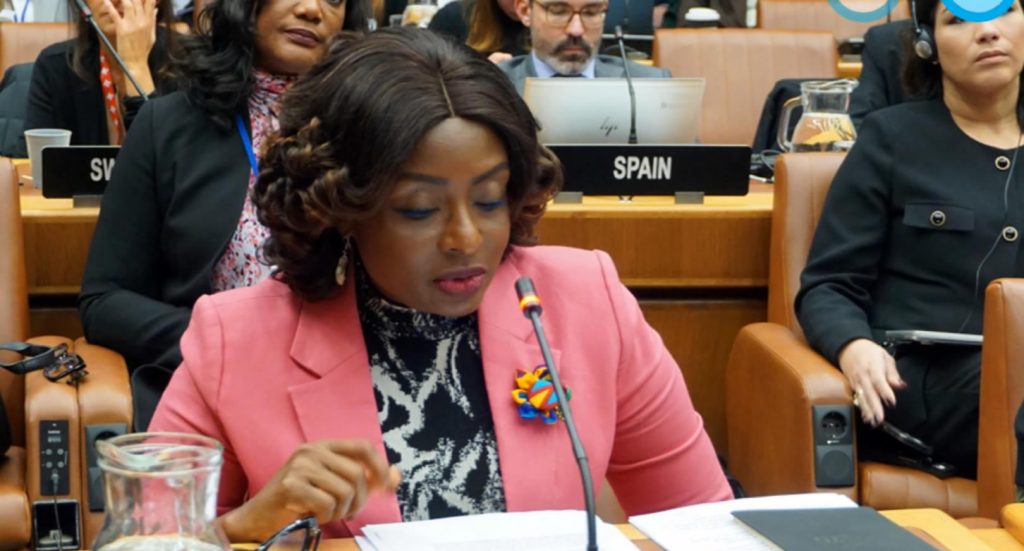
INTERVENTION BY GHANA, 4TH-5TH DECEMBER 2025
At the session, the Ambassador , HE Matilda Alomatu Osei-Agyeman emphasised Ghana’s position that well-resourced and well-coordinated technical assistance programmes are essential for building resilient institutions, enhancing cooperation and supporting national reform efforts, particularly in Africa.
Reaffirming the strong link between drug policy and the 2030 Agenda for Sustainable Development, she shared Ghana’s commitments to SDGs 3 and 16 as central to our national and regional priorities in building peaceful, just and inclusive societies that require sustained investment in criminal justice institutions, community engagement, and international cooperation.
Regional platforms were presented as invaluable for deepening cooperation on drug control and countering transnational organized crime, which increasingly threaten the peace and stability of our region.
Unfortunately, West Africa’s strategic position has made our region an increasingly attractive transit corridor.
Equally alarming is the surge in synthetic opioids. Tramadol misuse which remain one of the most severe drug-related health concerns affecting West Africa.
But even more dangerous is the emergence of nitazenes, highly potent synthetic opioids. These developments highlight the urgency of strengthening our capacity to identify, monitor, and respond to new synthetic substances.
A call was therefore made to adopt the following 4 clear set of regional priorities.
- We must strengthen intelligence sharing mechanisms. Real-time operational exchanges among West African states are essential, and cooperation between law enforcement, customs, and port authorities must be reinforced.
- We need to build stronger forensic and laboratory capacity. Our scientific systems must be able to detect synthetic opioids, identify emerging new psychoactive substances, and analyse adulterated drug mixtures. Frontline officers must also have access to rapid drug identification tools.
- We must disrupt the financial foundations of drug trafficking. Anti-money laundering measures need to be prioritized, and asset tracing, freezing, and recovery instruments must be strengthened across the region.
- We must protect our youth. Prevention programmes, early interventions, and school-based awareness initiatives must be scaled up. Treatment and rehabilitation services must be accessible, evidence-based, and grounded in a public-health and human-rights approach. We must work closely with all partners to protect our people, strengthen our institutions, and build a safer, more resilient West Africa.
- We must disrupt the financial foundations of drug trafficking.
- We must protect our youth. Prevention programmes, early interventions, and school-based awareness initiatives must be scaled up.
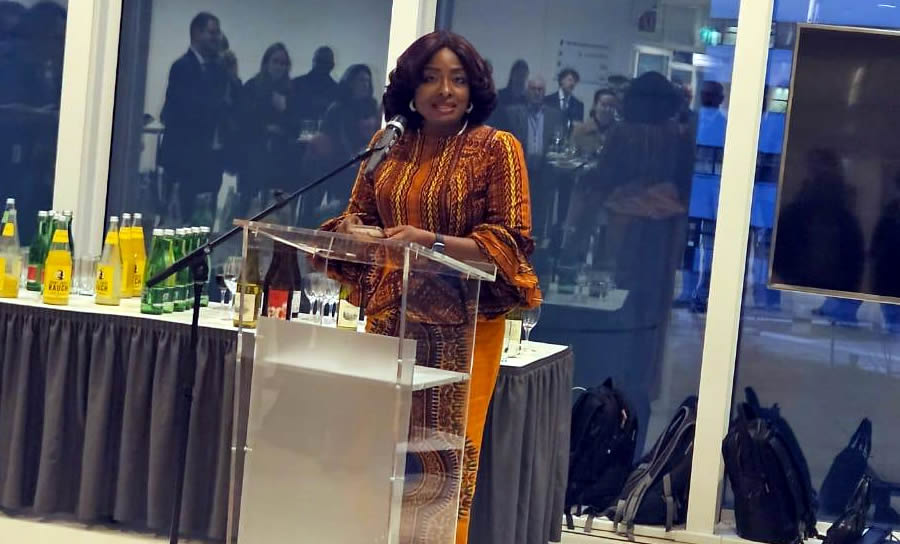
A recent collaboration was therefore highlighted between the UNODC, the Government of the Netherlands, the Global Initiative Against Transnational Organized Crime, under the theme, MAPPING THE FUTURE OF DRUG MARKETS
IN WEST AFRICA SYNTHETICS, COCAINE, CRIMINAL MONEY, AND STRATEGIC RESPONSES, ACCRA, 27-28TH NOVEMBER 2025.
We must work closely with all partners to protect our people, strengthen our institutions, and build a safer, more resilient West Africa.



 English
 Deutsch