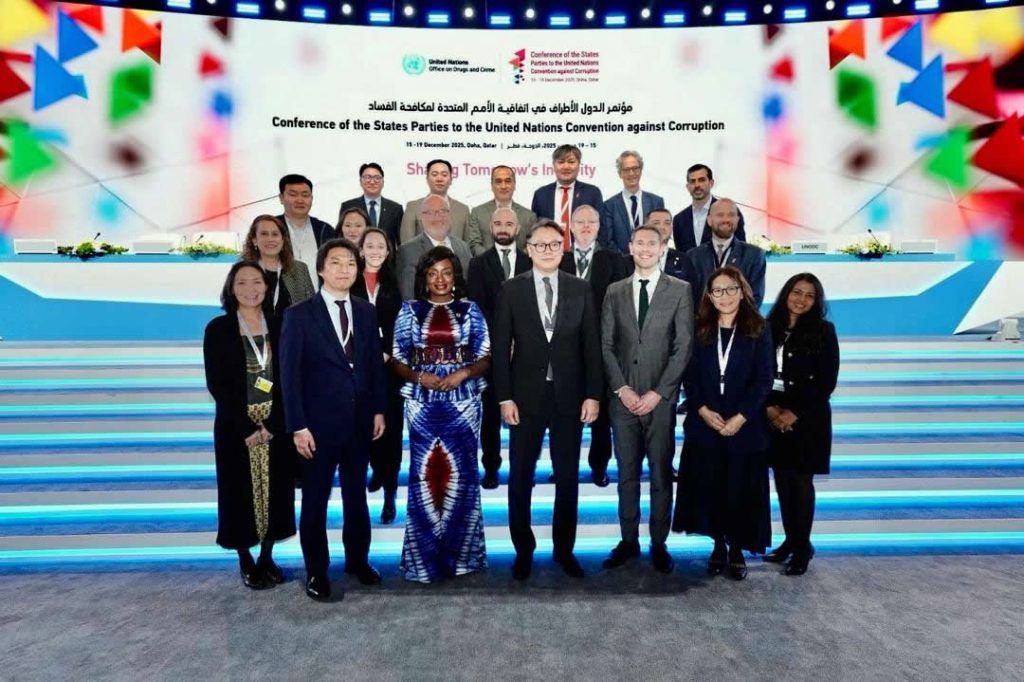
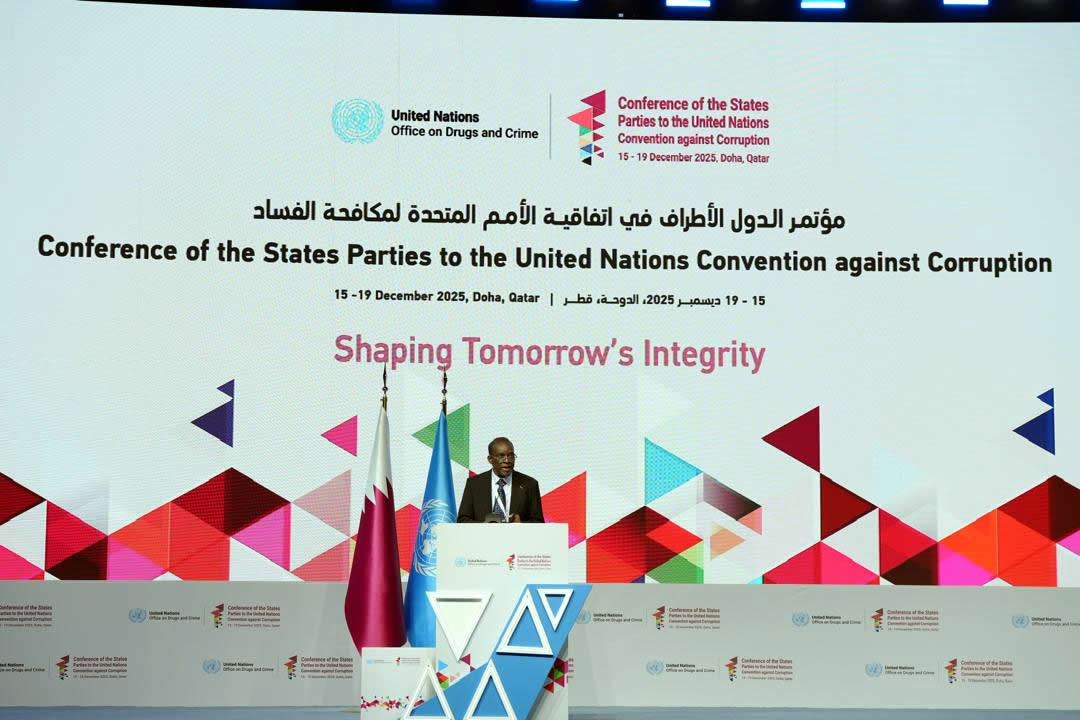
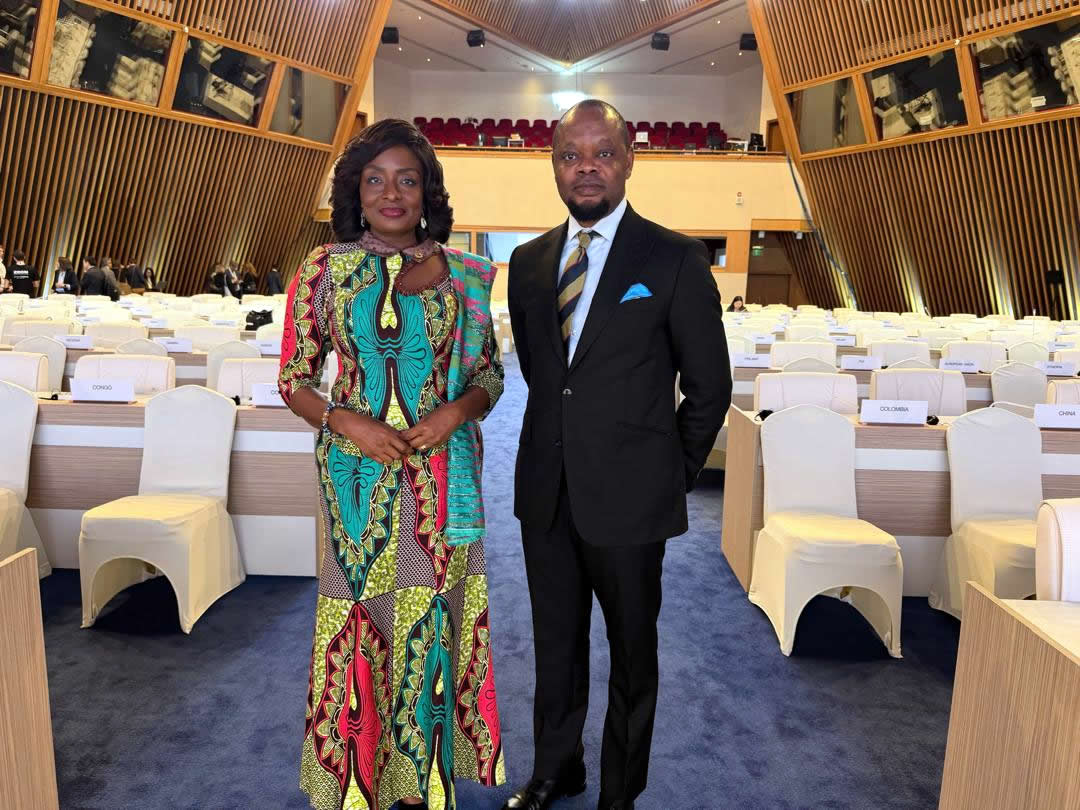
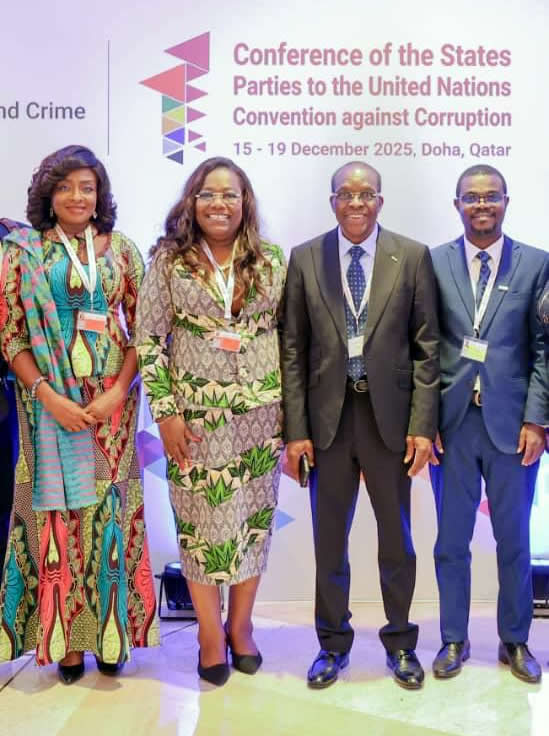
The world’s largest anti-corruption gathering met to assess all aspects of corruption and monitor implementation efforts under the theme, “Shaping Tomorrow’s Integrity” and by the Speaker of Parliament
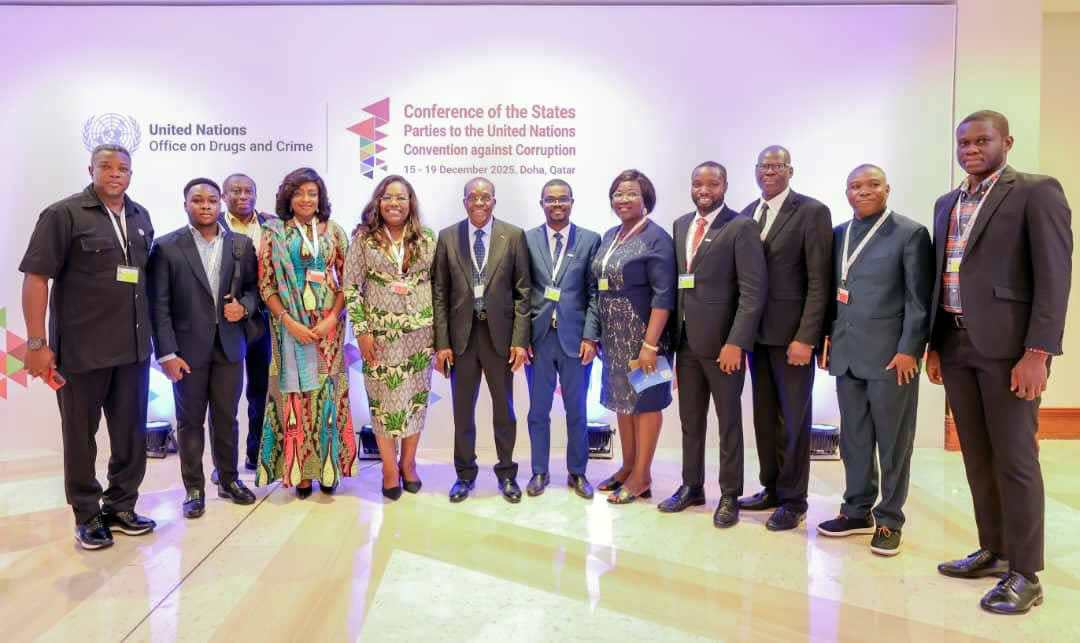
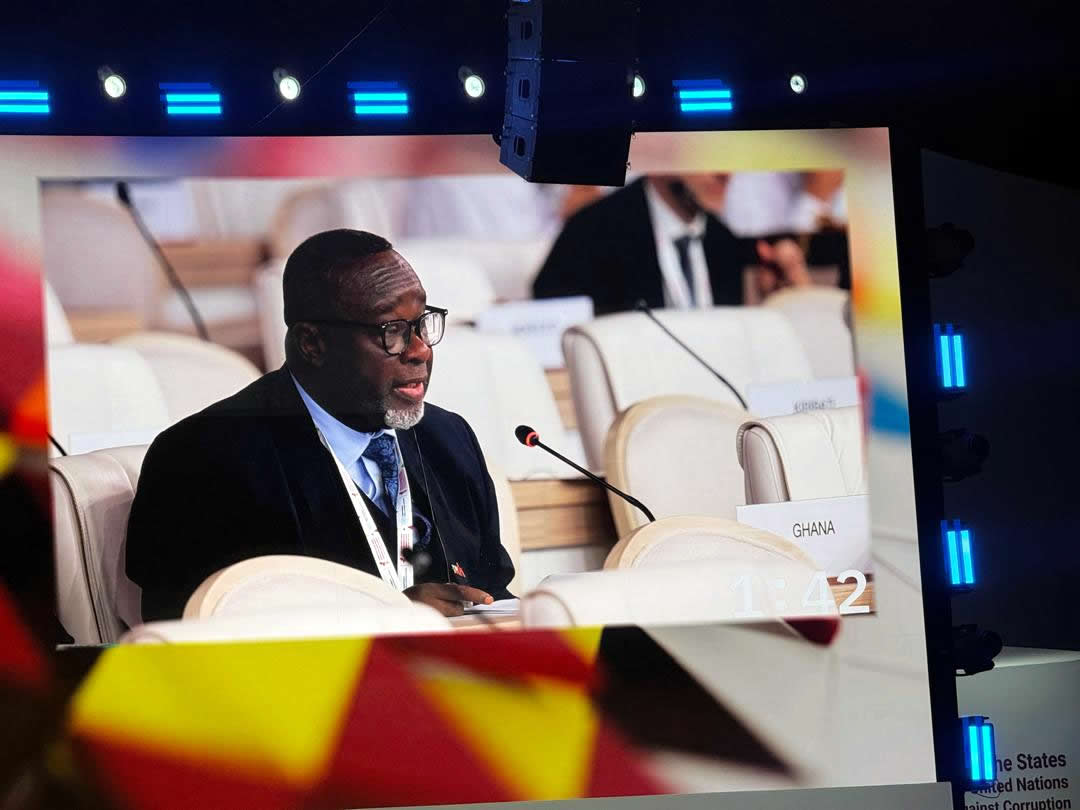
- The Rt. Honourable Speaker of Parliament, the Rt. Honourable Alban Sumana Bagbin who led Ghana’s delegation, presented Ghana’s anti-corruption efforts and made a strong case for collaboration to tackle the menace, which he described as a key national priority for Ghana, grounded in a firm commitment to transparency and accountability at the highest level. He outlined Ghana’s strong political leadership, robust preventive measures, effective deterrence mechanisms, enhanced asset recovery efforts, resilient institutions, and broad public participation. He further emphasized that Ghana’s efforts fully align with the principles and provisions of the United Nations Convention against Corruption. Challenges, as well as measures put in place by Ghana to prevent and combat corruption and to strengthen international cooperation and technical assistance, were highlighted during the session.
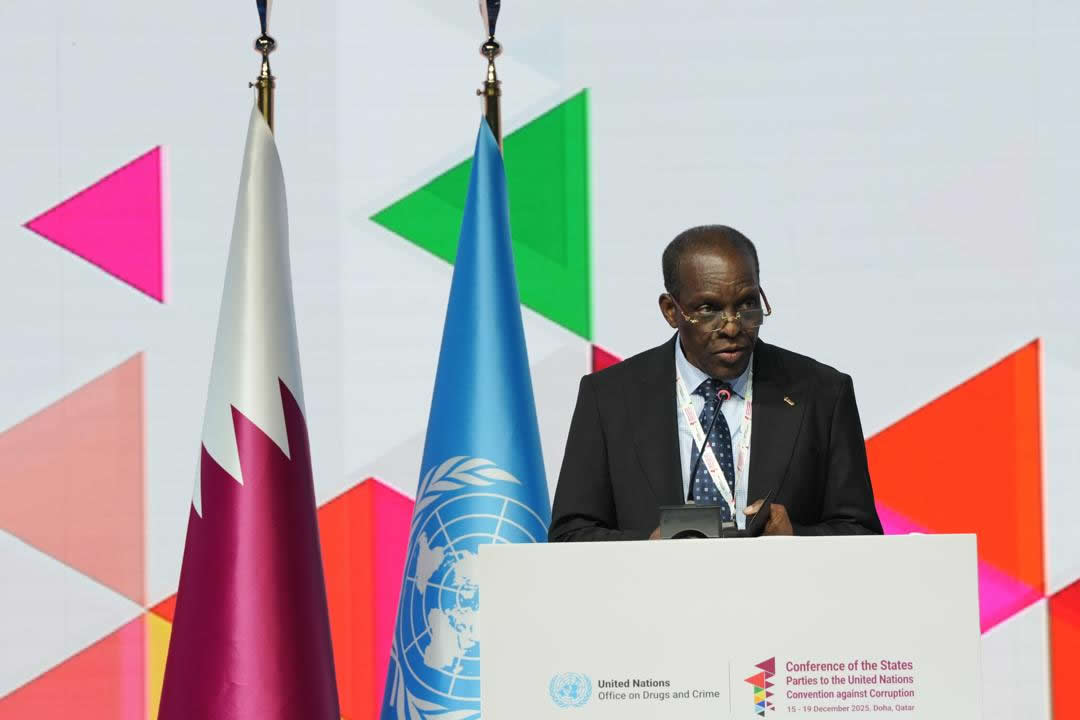
- The Chief Justice of Ghana, Justice Baffoe-Bonnie recalled the Government’s initiatives as outlined by the Rt. Honourable Speaker Bagbin, ultimately “aimed at the creation of a sustainable democratic society founded on good governance and imbued with high ethics and integrity”. He stressed that the National Anti Corruption Action Plan was aimed at building public capacity to condemn and fight corruption, making it a high-risk, low-gain activity, institutionalizing efficiency, accountability, and transparency in public, private, and not-for-profit sectors, conducting effective investigations and prosecutions of corrupt conduct, with a deliberate focus on gender dimensions and human rights.
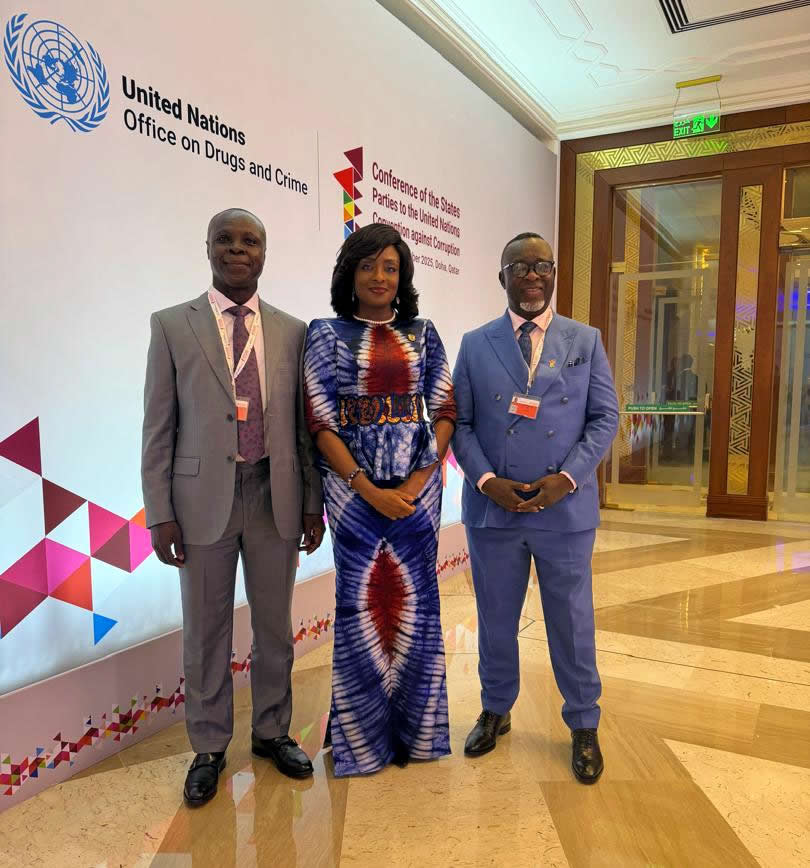
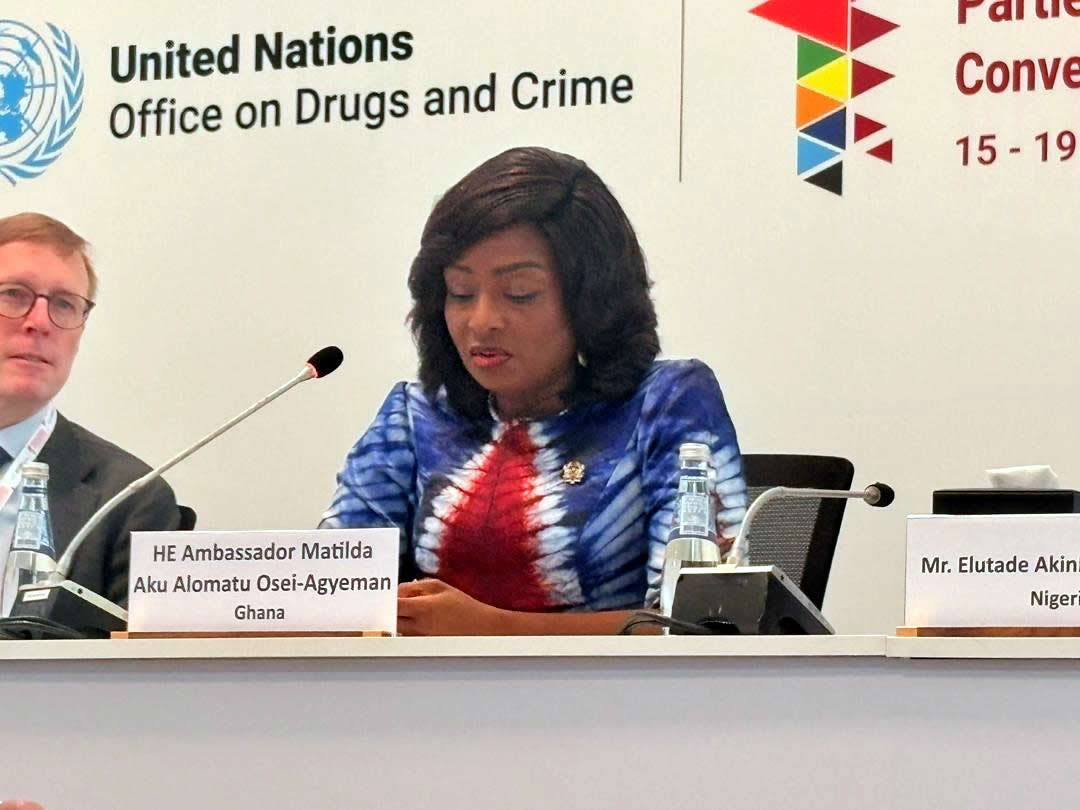
- On technical assistance and international cooperation, the Ambassador and Permanent Representative, H.E. Matilda Alomatu Osei-Agyeman, highlighted Ghana’s support from the UNODC in evaluating our National Anti-Corruption Action Plan (NACAP) and the Implementation Review Mechanism’s guidance through two cycles of review in 2015 and 2019, demonstrating the transformative power of well-coordinated technical assistance programmes. These partnerships have strengthened our capacity in investigations, asset recovery, and legal reforms with the enactment of several anti-corruption laws, including the Right to Information Act, Witness Protection Act, and enhanced our anti-money laundering framework. I continued that the partnerships had also provided knowledge transfer that strengthen our evaluation systems permanently to create a continuous learning cycle.
- She outlined Ghana’s priorities for future technical assistance and international cooperation which include grassroots-level implementation support to deepen impact beyond national institutions, specialized training on emerging corruption risks, digital corruption and sextortion, gender-responsive programming that addresses corruption’s differential impacts.
- While calling for enhanced South-South cooperation and dedicated technical assistance programmes for developing countries to build investigative capacity, strengthen prosecutorial expertise, and modernize legal frameworks, the Ambassador commended the UNODC for its invaluable support in line with the UN Sustainable Development Goals (SDGs), particularly, Goal 16.5 which aims at substantially reducing corruption and bribery in all forms and Goal 16.6, to develop effective, accountable and transparent institutions at all levels.
- A major highlight for Ghana was the adoption, by consensus, of a landmark resolution on “Preventing and Combating Corruption through Enhancing Transparency in the Funding of Political Parties, Candidatures for Elected Public Office and Electoral Campaigns.” Through effective and strategic engagement, Ghana, Norway, Albania, and Mongolia succeeded in harnessing effective multilateralism and successful negotiations to advance this first-ever resolution addressing political finance transparency.
- Ghana’s delegation also participated in numerous side events on topics including Harnessing Data for Integrity, Strengthening Oversight Institutions, Protecting Whistle-Blowers, Anti-Corruption and Human Rights, Leveraging Supreme Audit Institutions in the Fight Against Corruption, Meaningful Civil Society Participation in UNCAC Reviews, NGO Support, among others.
- The Rt. Honourable Speaker participated in a roundtable dialogue titled “Public Policy and Geopolitics for Parliamentarians,” organized by the Global Organization of Parliamentarians Against Corruption (GOPAC), of which he is a founding member.
- Aside from the resolution on “Enhancing Transparency in the Funding of Political Parties, Candidates for elected Public Office, and Electoral Campaigns”, the Conference adopted ten additional resolutions by consensus. These covered a wide range of topics affecting the global geopolitical system and linked to corruption, including Strengthening the Integrity of Children and Young People through Education, the role corruption plays in facilitating other crimes such as Migrant Smuggling and Environmental Crimes, and the future of the United Nations Convention against Corruption Peer-Review Mechanism, among others.
- The Conference concluded with the adoption of the “Doha Declaration 2025 on Strengthening International Cooperation and Technical Assistance and Seizing the Opportunities Provided by Artificial Intelligence Systems in Preventing and Combating Corruption.”
- The United Nations Convention against Corruption and the Conference of the States Parties constitute the only global, legally binding framework against corruption. Under the Convention, States Parties are legally obliged to prevent and criminalize corruption, promote international cooperation, recover and return stolen assets, and improve technical assistance and information exchange in both the public and private sectors.


 English
 Deutsch